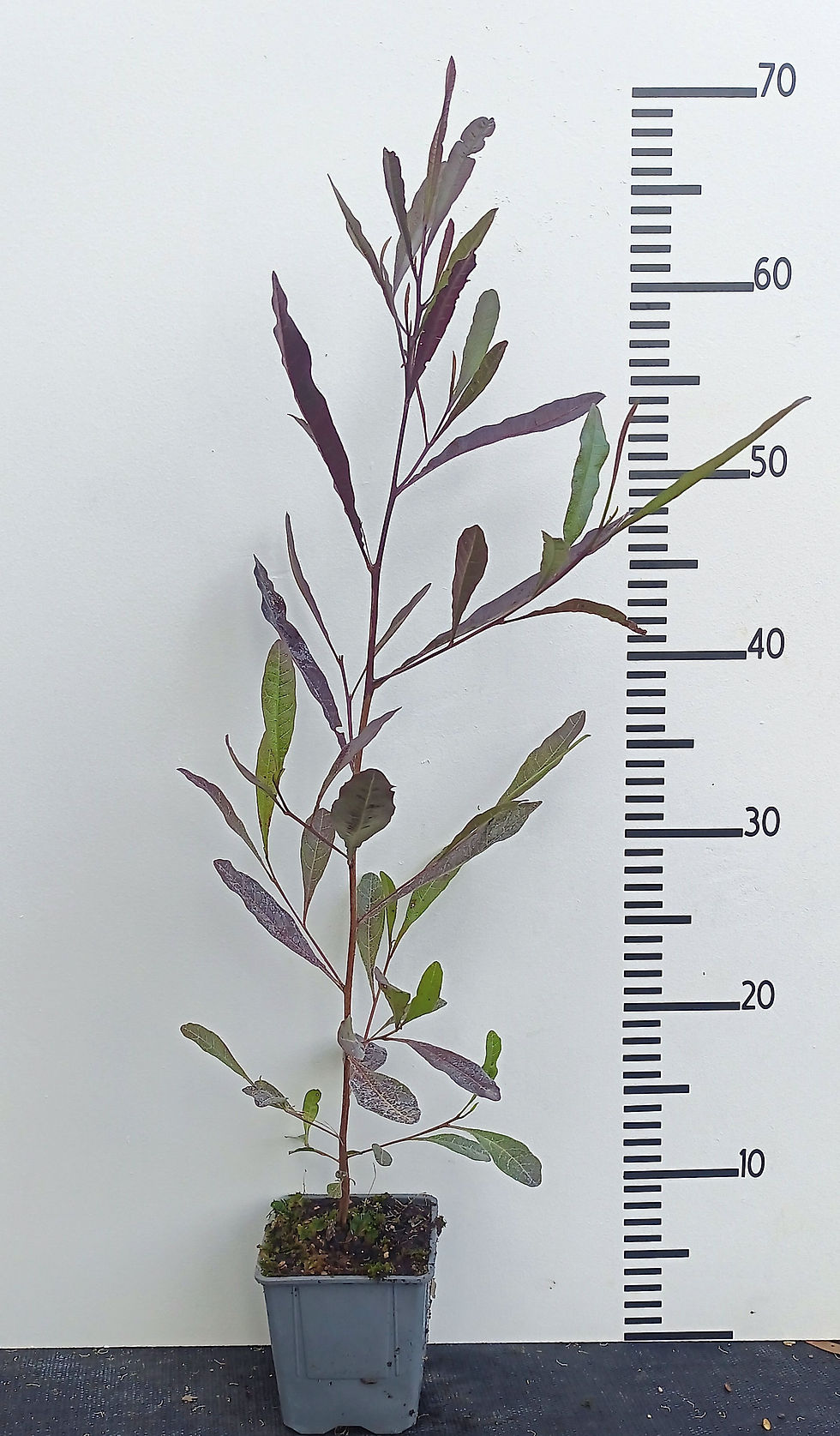
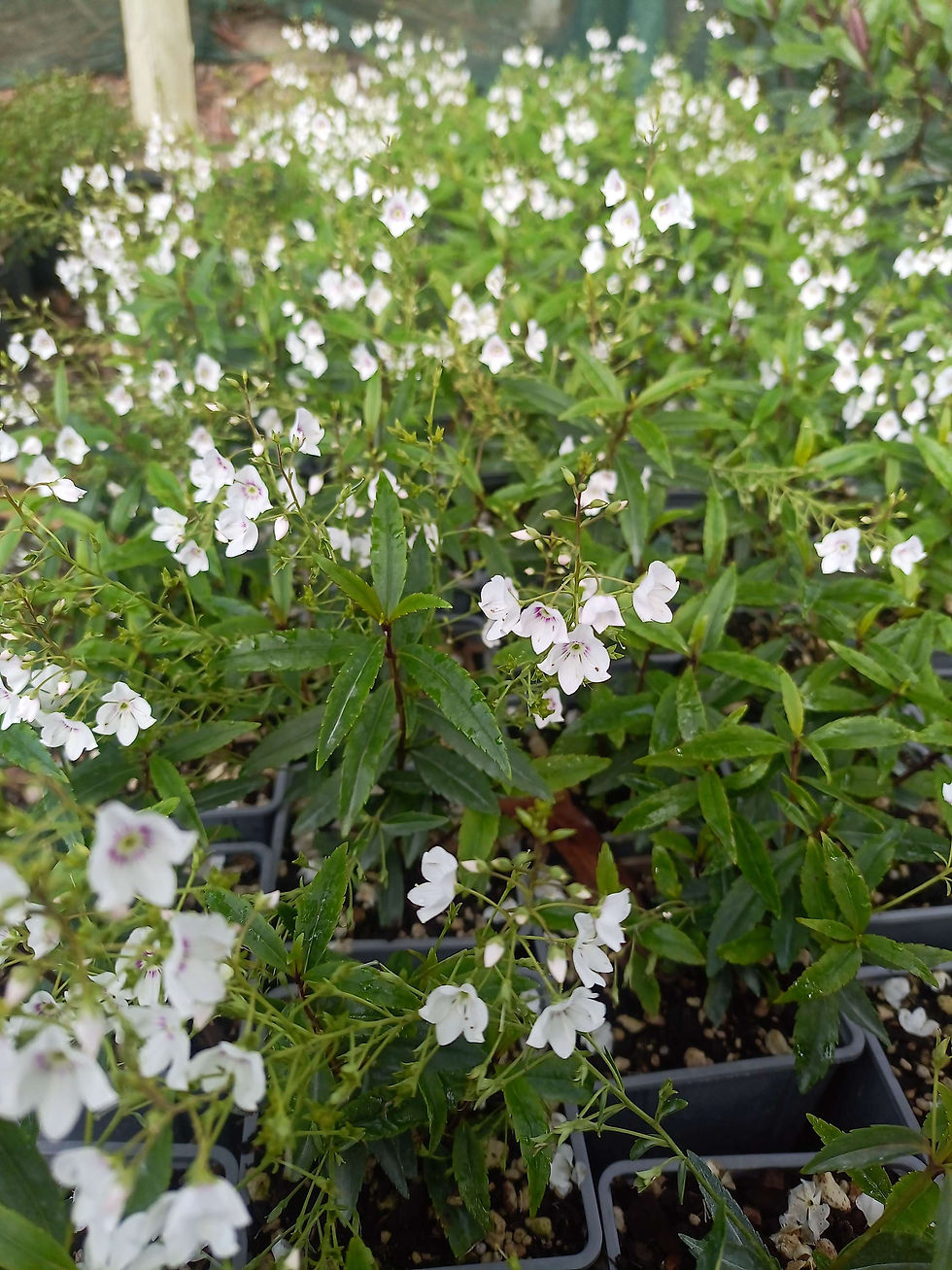
Clianthus puniceus ‘white Kākābeak’ (kākābeak, kōwhai ngutukākā) is a striking New Zealand native shrub in the Fabaceae family, known for its dramatic clusters of rare white or creamy-white flowers, curved “beak-shaped” flowers in spring, set against soft grey-green foliage, typically growing 1–2 metres tall and spreading wider, making it ideal for feature planting, containers, and sheltered gardens; it thrives in full sun with free-draining soil, and while fast-growing, it is short-lived, requiring protection from frost, strong wind, and wet soils to perform well.
The Kākābeak’ requires moderate to high maintenance compared with many other native shrubs. It benefits from regular pruning after flowering to encourage a compact, bushy shape and improve future flowering, as well as protection from frost, wind, and heavy, wet soils. It also performs best with consistent watering during dry periods and occasional feeding in poor soils, while careful siting in a warm, sheltered position is key to long-term success.