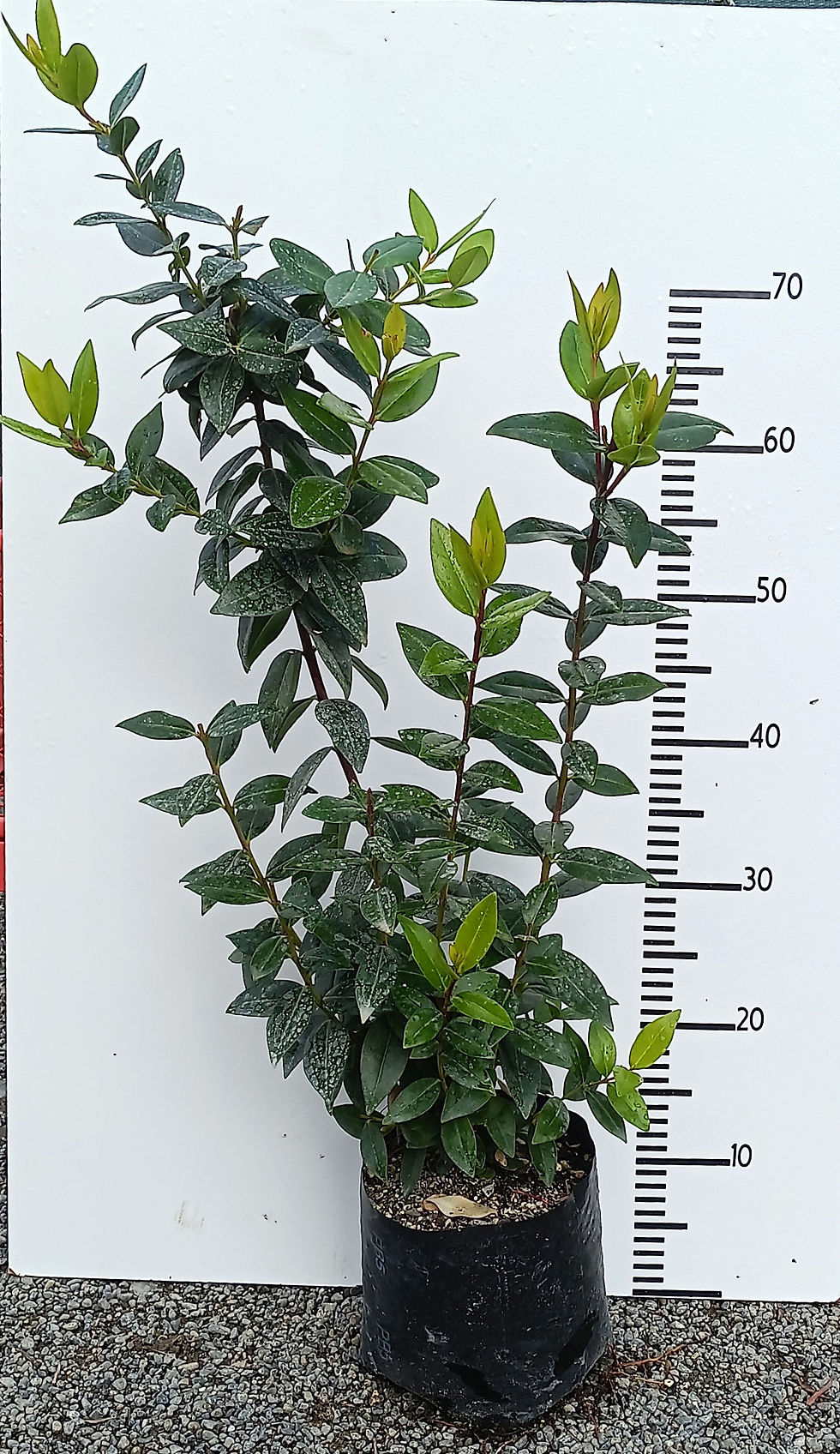
Leptospermum scoparium Mānuka / Kāhikātoa / New Zealand Tea Tree is arguably the most iconic native plant in Aotearoa, and one that needs little introduction. A prolific evergreen shrub or small tree, Mānuka is often one of the first species to regenerate on cleared or disturbed land, with dense branching, small aromatic sharply-tipped leaves, and masses of delicate white to pale pink flowers. From spring, the bushes are smothered with a profusion of flowers beloved by bees and Mānuka is fast-growing and very hardy, tolerating hot dry soils and cold temperatures alike. Its dense growth offers shelter and nesting sites for native birds and insects, while its deep root system stabilises soil and prevents erosion on vulnerable slopes. As a pioneer species, it creates the conditions that allow slower-growing natives to follow.
Leptospermum scoparium - manuka
Botanical Name Leptospermum scoparium Māori Name Mānuka, Kāhikātoa Common Name New Zealand Tea Tree Family Myrtaceae Type Evergreen shrub / small tree Origin Native to New Zealand (including the Chatham Islands) and south-east Australia Mature Height Typically 2–5 m; occasionally taller Mature Spread 1.5–3 m depending on variety and conditions Sun Requirements Full sun; prefers well-drained, slightly acidic soil Soil Tolerates poor, sandy, or coastal soils; avoid waterlogged conditions Flowering Early spring through summer — main flush October to January Wind Tolerance Excellent — suited to exposed and coastal sites Frost Tolerance Very hardy once mature — tolerates drought, waterlogging, strong winds, and frost Drought Tolerance Good once established Growth Rate Fast — pioneer species Lifespan Naturally dies out after 20–25 years as a pioneer species Maintenance Very low Conservation Status Not Threatened (precautionary listing due to myrtle rust risk) Planting Tips: Plant in a hole twice the width and depth of the root ball, mixing quality compost with existing soil at a 50:50 ratio for optimal establishment. Position the plant so the root crown sits level with the surrounding ground, firming soil gently to eliminate air pockets while ensuring good drainage. For hedging or dense planting, space plants 1–1.5 m apart. For individual specimens or naturalistic plantings, allow 2–3 m between plants.
Ideal Uses: Ideal for hedges, screens, and specimen plantings. Excellent for coastal gardens, native gardens, and wildlife-friendly landscapes. Attracts bees, birds, and beneficial insects. Also highly suited to erosion control, revegetation, and as a nurse crop for slower-growing natives.
Ongoing Care: Water regularly during the first year to help establish, then reduce watering as it becomes drought-tolerant. Lightly prune after flowering to maintain a compact shape and encourage bushiness. Mānuka is generally pest-free, frost-hardy, and wind-tolerant. Note that plants do not regenerate from old wood, so avoid cutting back hard into bare stems.