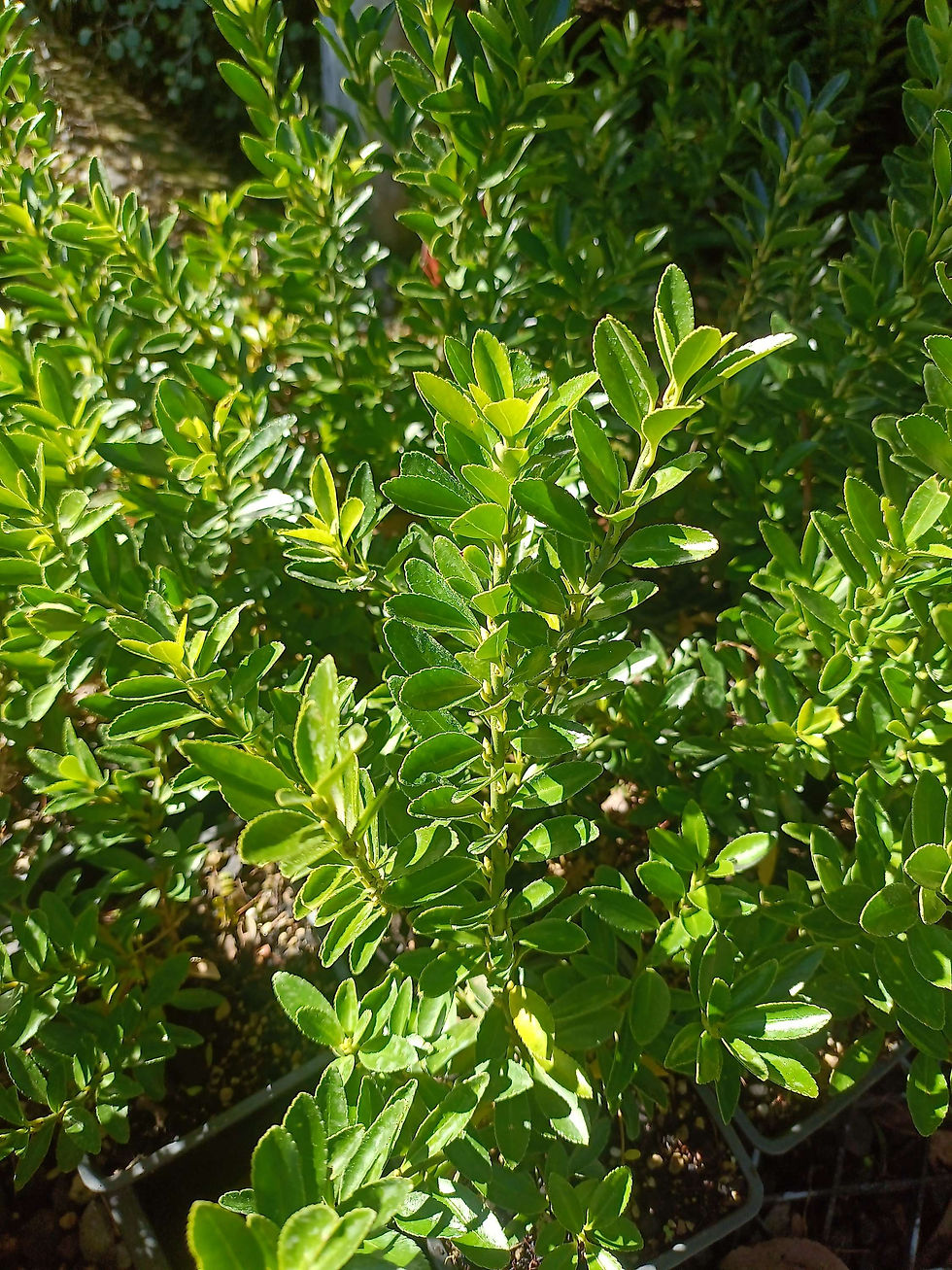
Pseudopanax crassifolius (Lancewood / Horoeka)
Is part of the Araliaceae family, a distinctive New Zealand native tree famous for its dramatic change from juvenile to adult form. The juvenile stage features long, narrow, downward-pointing leaves with toothed edges and a rigid, almost architectural appearance. As it matures, it develops a rounded crown with shorter, broader leaves, eventually forming a small to medium-sized tree typically 6–10 m tall. Producing small, greenish to cream flowers arranged in branched clusters (panicles). Flowering occurs mainly in late summer to autumn and is relatively inconspicuous.
Pseudopanax crassifolius - lancewood
$10.00Price
Botanical Name Pseudopanax crassifolius (Lancewood / )
Family:Maori Name Horoeka Common Name Lancewood Family Araliaceae Type Small Tree Origin Endemic to New Zealand, found naturally throughout the North and South Islands in lowland and coastal forests, forest margins, and regenerating bush Mature Height 6–10 m Mature Spread 2–4 m Sun Requirements Full sun to partial shade Soil Prefers free-draining soils Flowering small, greenish to cream flowers arranged in branched clusters in late summer to autumn Wind Tolerance Tolerant
Frost Tolerance Tolerant
Drought Tolerance Good — tolerates drought and dry soils Growth Rate moderate Maintenance Very low Conservation Status Not Threatened