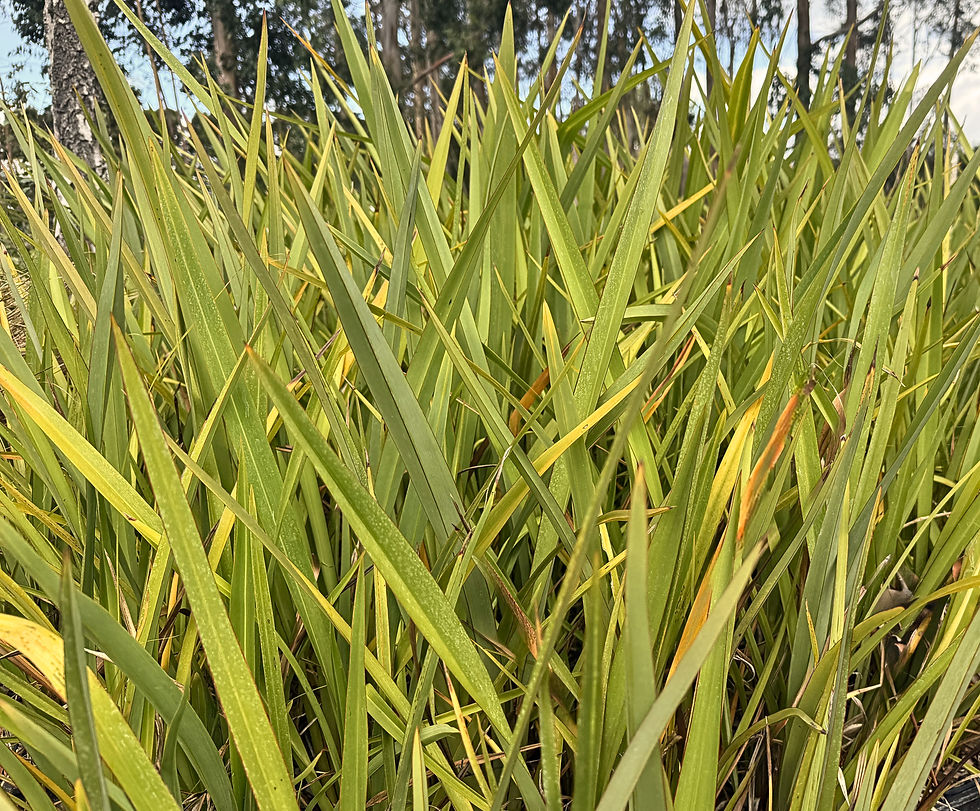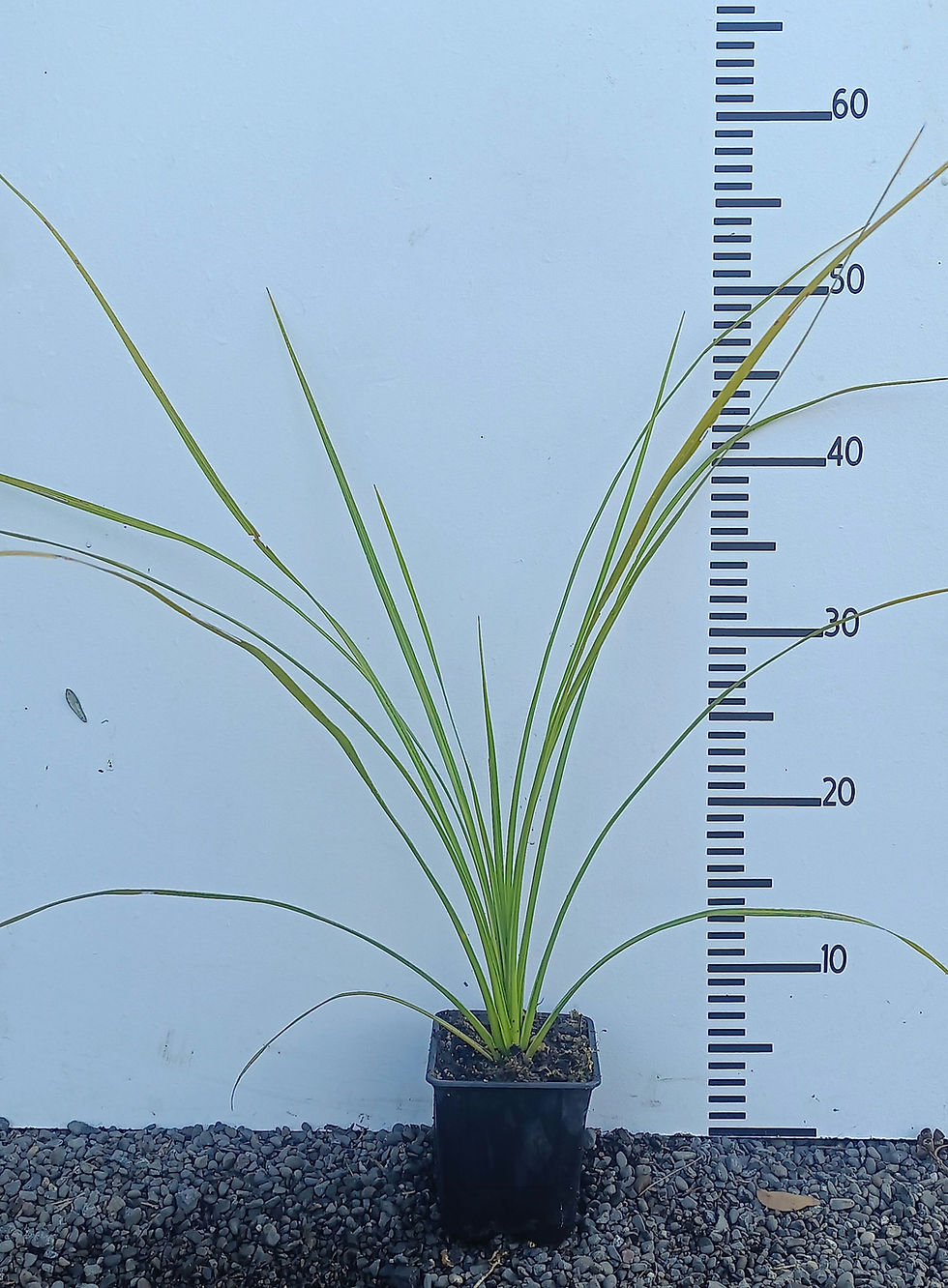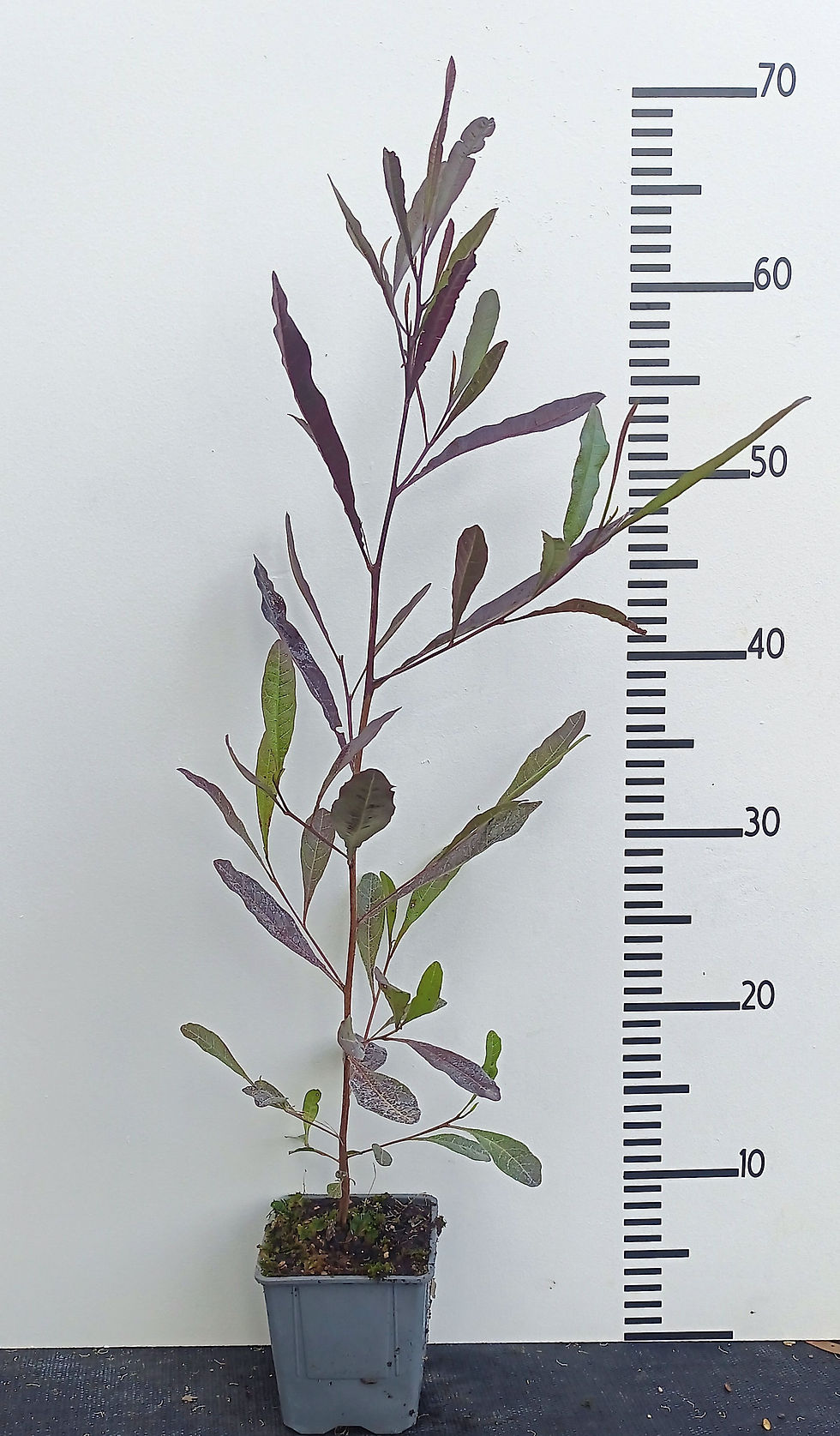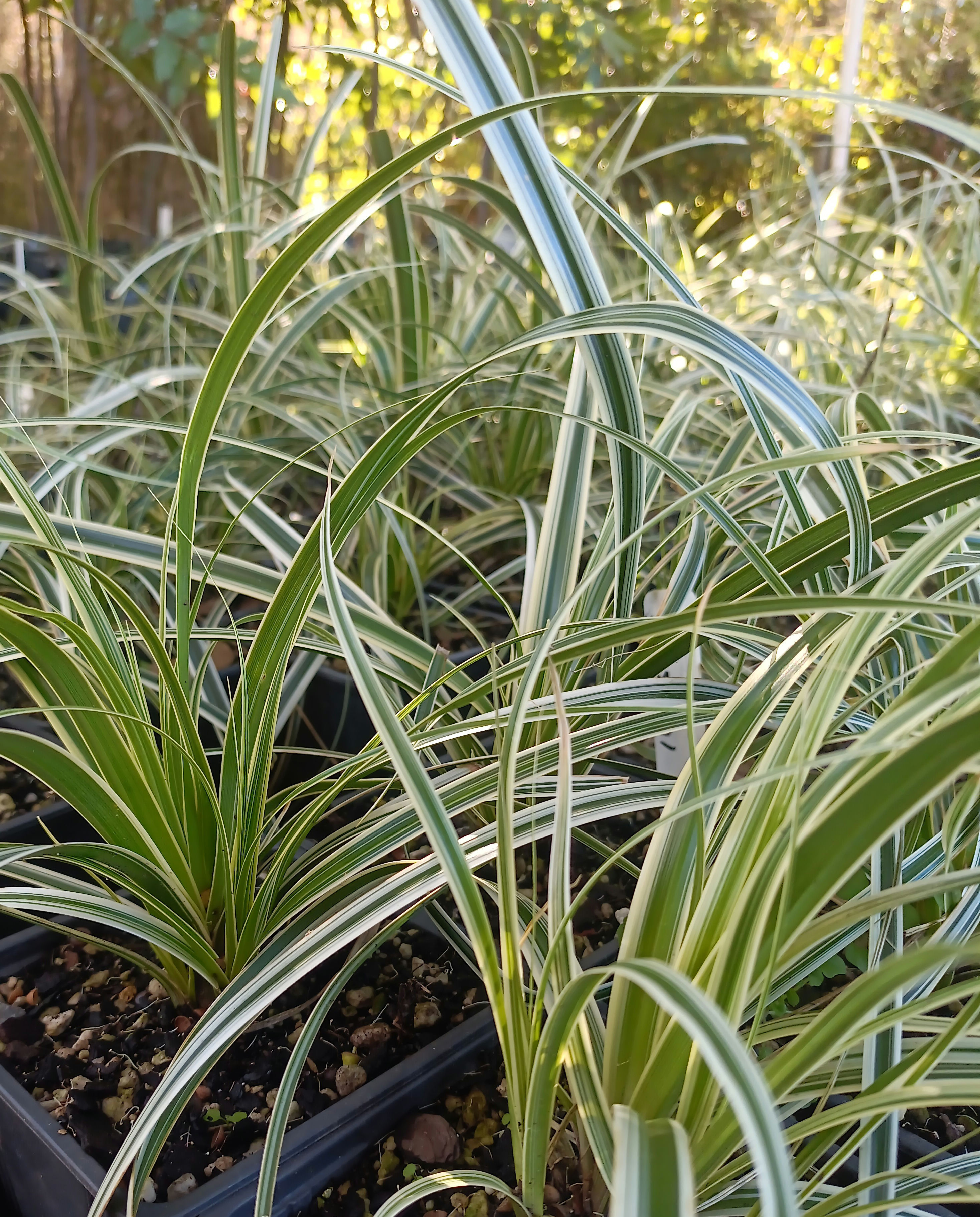

Carex ‘Feather Falls’
(Ready in spring)
Are a hardy ornamental sedge valued for its cascading, arching green foliage that forms soft, fountain-like clumps, typically growing around 30–50 cm tall and spreading wider over time, making it ideal for borders, mass planting, containers, and erosion control on slopes; it performs best in full sun to partial shade in moist but free-draining soils, is low maintenance, moderately drought tolerant once established, and has good tolerance of wind and light frost.
Carex feather falls
Botanical Name Carex Māori Name Common Name feather falls Family Cyperaceae Type Evergreen perennial sedge Origin Endemic to New Zealand — North, South, and Stewart Islands; also Chatham Island Mature Height 30-60cm Mature Spread 30-60cm Sun Requirements Full sun to partial shade Soil Grows well in most soils and moisture regimes; thrives in wet, boggy conditions Water Tolerance Tolerates waterlogging year-round; prefers water depths of 10–30 cm Flowering Late September to December — loosely branching drooping panicles Fruiting October to March — seeds dispersed by wind, water, and birds Wind Tolerance Good Frost Tolerance good tolerance to light frosts Drought Tolerance moderately once established Growth Rate Very fast growing Maintenance Very low Conservation Status Not Threatened We are committed to sending you healthy, quality plants and want you to be completely satisfied with your purchase.
Damaged or Incorrect Plants: If your plant arrives damaged or is not what you ordered, please contact us within 48 hours of delivery with a photo of the plant and your order number. We will arrange a replacement or issue a full refund at no cost to you.
Plant Health Guarantee: We guarantee your plant will arrive in good health. If your plant arrives in poor condition due to transit issues, we will work with you to make it right.
Change of Mind: As living plants are perishable, we are unable to accept returns for change of mind. We encourage you to research plants before purchasing — our team is always happy to answer questions before you buy.
Once Planted: We are unable to offer refunds for plants that have been planted and have subsequently died. Plant survival depends on local conditions, planting technique, watering, and ongoing care — factors outside our control.
Getting our plants to you…
Tree Guys Nurseries will courier your order to any destination in New Zealand - North or South Islands. Orders are dispatched on a Monday or Tuesday, so all orders must be received by Friday of the week before.
Please ensure delivery details are clear and accurate and add delivery instructions if needed - that way we can get our plants to you faster.
Please note: We have a minimum plant order of $45 (unless you are picking up plants).
Delivery Costs:
Courier & Packing costs charges are calculated at checkout time depending on the size of stock selected and the delivery destination - by going to check out you can find out the cost of freight, this does not obligate you to proceed with the order.
- All plants and freight must be paid for prior to your order being sent.
- If the plants you order are too big to be couriered we will contact you about alternative delivery arrangements.
Box Sizing & Freight Costs:
Small:
8 x 9cm pots
6 x 10cm pot
2 x Pb5 Bag or 3L Pot
Medium:
25 x 9cm pots
16 x 10cm pot
6 - 8 x Pb5 Bag or 3L Pot
Large (suitable for taller plants):
24 x 9cm pots
15 x 10cm pot
6 - 8 x Pb5 Bag or 3L Pot
North Island
Hawkes Bay - All Boxes $10
Northern Hawkes Bay - All Boxes $15
Outside Hawkes Bay - small $35, large $48
South Island
All of South Island - small $45, medium $55, large $90
Please note: We do not ship to Australia or internationally, in compliance with New Zealand biosecurity regulations.