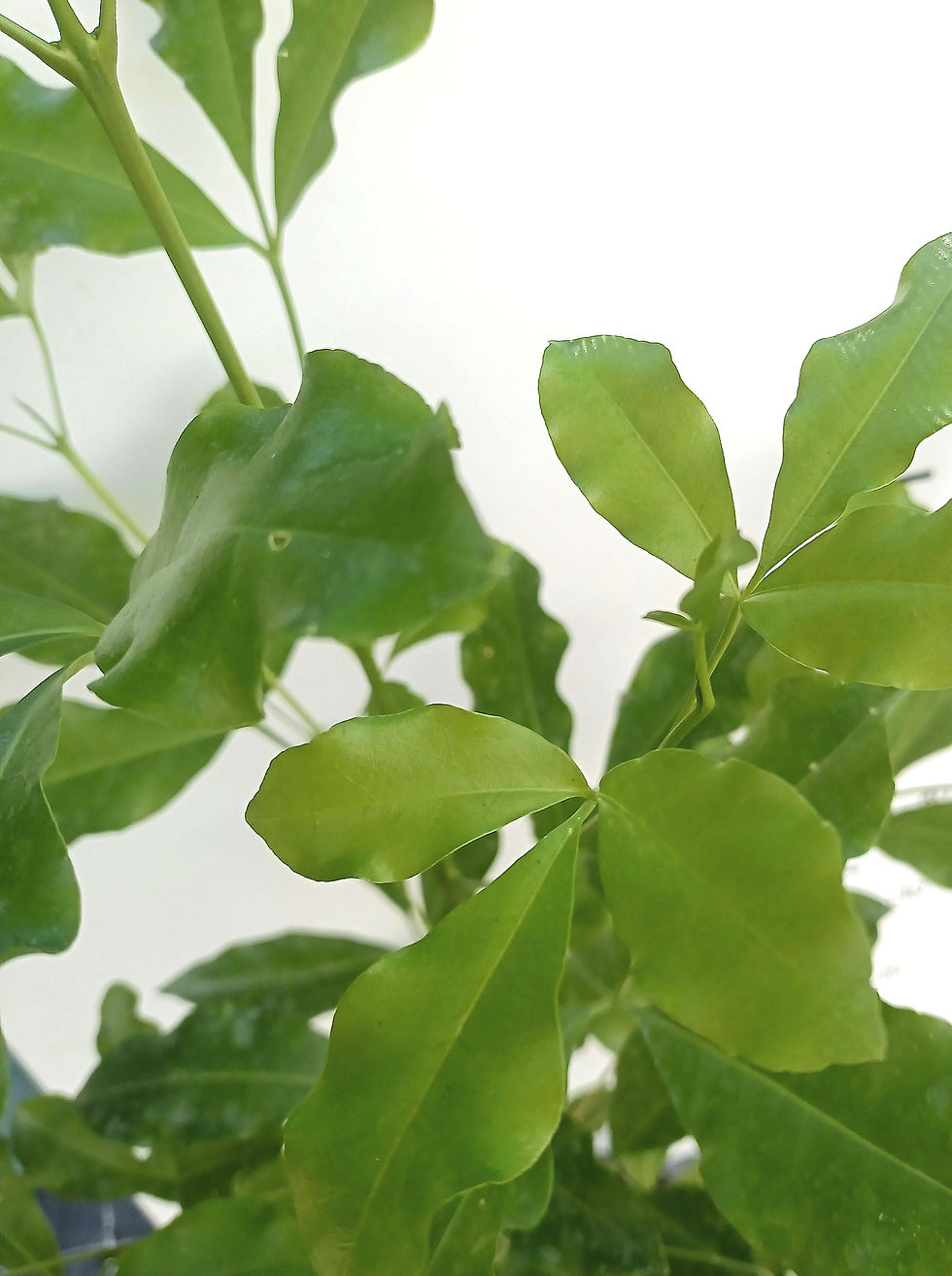
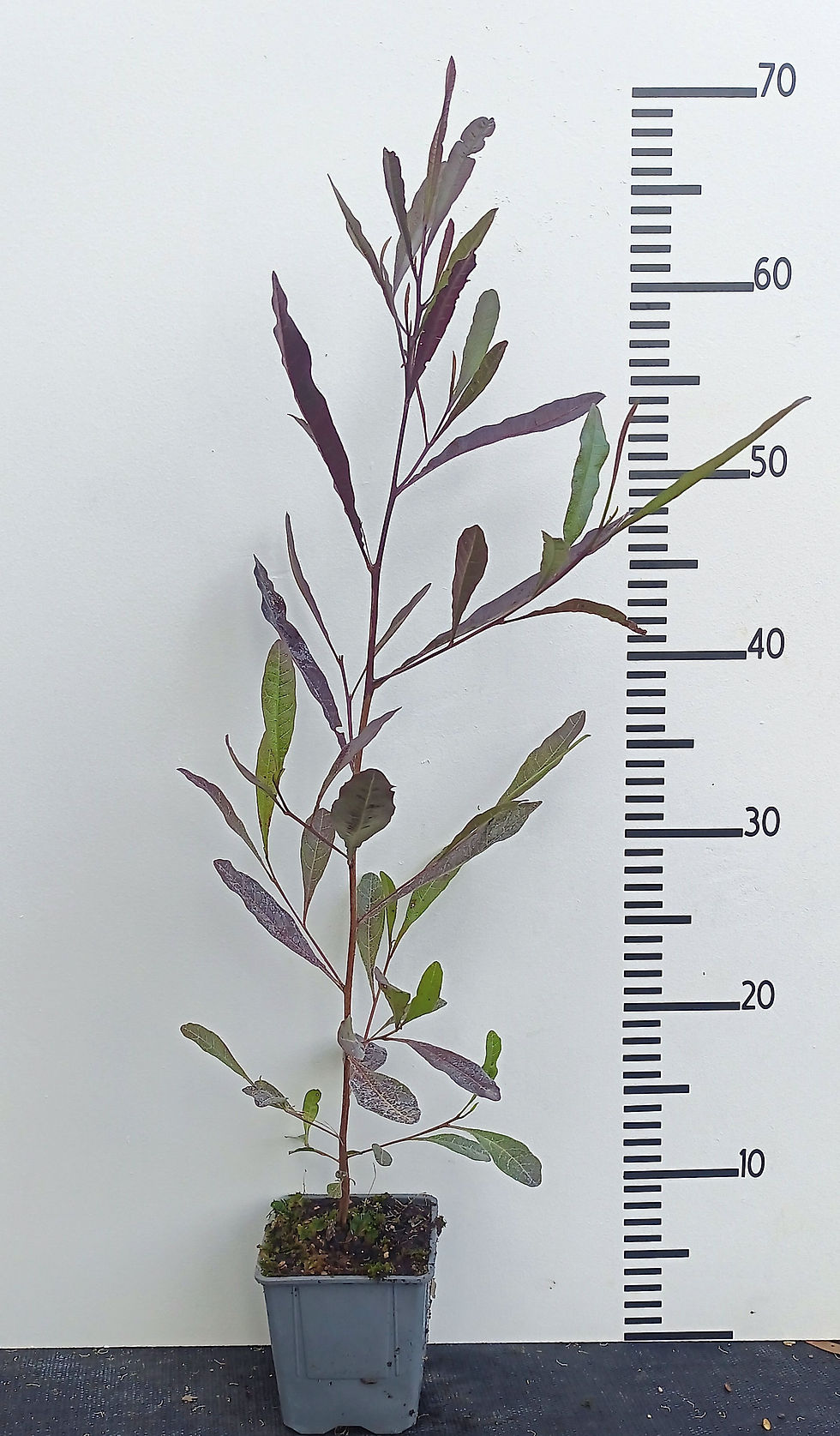
Myoporum laetum Ngaio / Mousehole Tree is one of New Zealand's toughest, most generous, and most ecologically valuable coastal natives. A fast-growing evergreen shrub or small tree, Ngaio bears thick, glossy yellow-green to dark green heavily spotted leaves and clusters of white flowers with purplish spots in spring and summer, followed by small purple oval berries loved by birds. Ngaio is drought and coastal hardy and can effectively control sound, wind, sun, and blowing sand, making it an excellent choice for a screen or canopy shade tree. It forms a rounded crown with spreading branches, often developing a wonderfully gnarled and windswept character in exposed coastal positions and responds beautifully to heavy trimming, making it as suitable for formal hedging as it is for naturalistic planting.
Myoporum laetum - ngaio
Botanical Name Myoporum laetum Māori Name Ngaio Common Name Mousehole Tree Family Scrophulariaceae Type Evergreen shrub / small tree Origin Endemic to New Zealand Mature Height Typically 6–10 m; can reach up to 10 m with a spread of up to 4 m Mature Spread Up to 4 m Sun Requirements Full sun to partial shade Soil Adaptable to various soil types including sandy and loamy soils; prefers well-drained conditions Flowering October to January — small white flowers with purple spots Fruiting Small purple-black berries following flowering — attracts kererū Wind Tolerance Excellent — highly suited to exposed coastal sites Salt Spray Tolerance Good — tolerates coastal salt spray Frost Tolerance Frost-tender when young; tolerates quite severe frosts once established Drought Tolerance Good once established — requires minimal watering Maintenance Low — tolerates heavy trimming Livestock Warning ⚠️ Toxic to horses, cattle, sheep, and pigs Conservation Status Not Threatened (nationally); At Risk — Regionally Declining in some urban areas