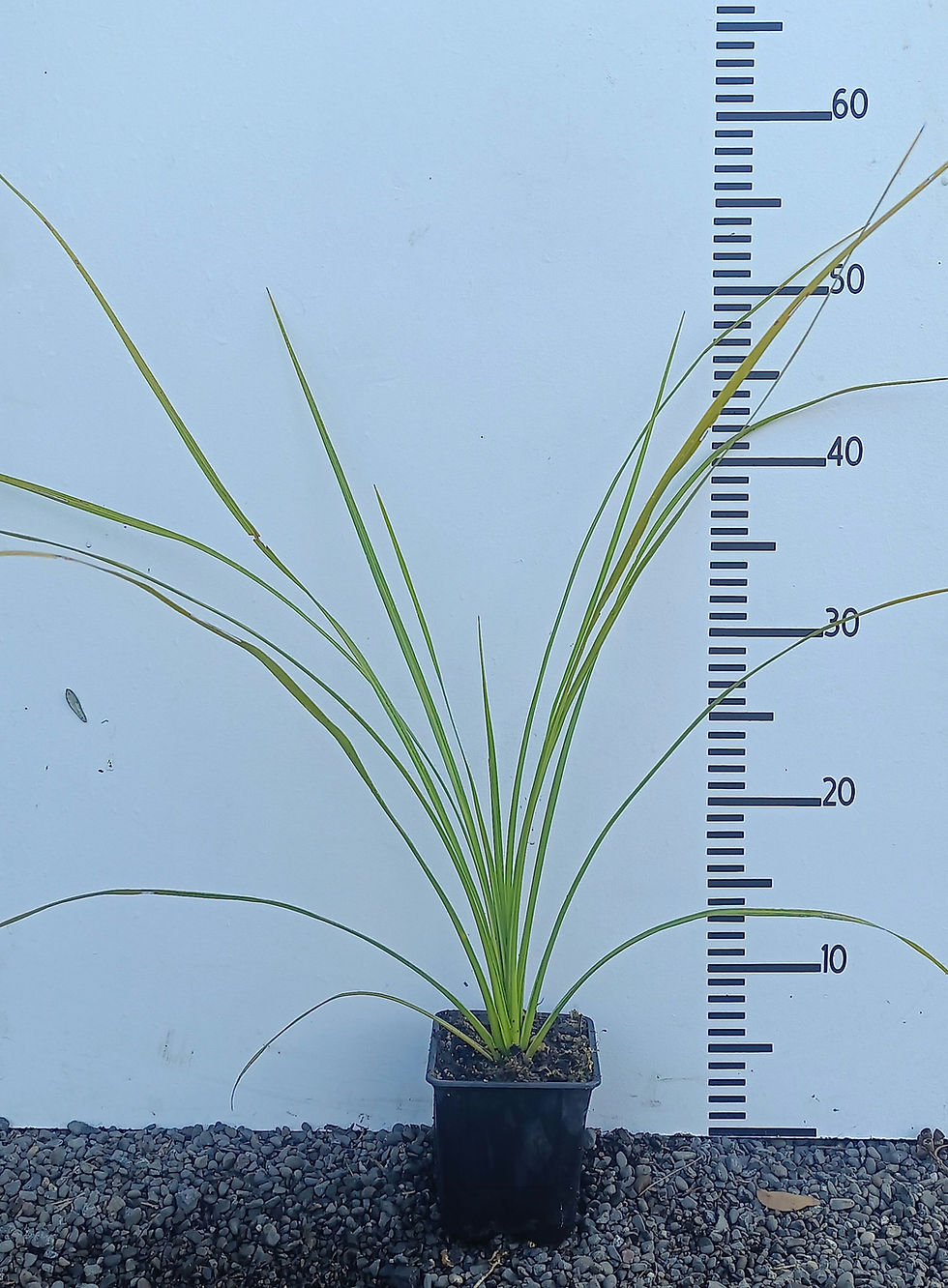
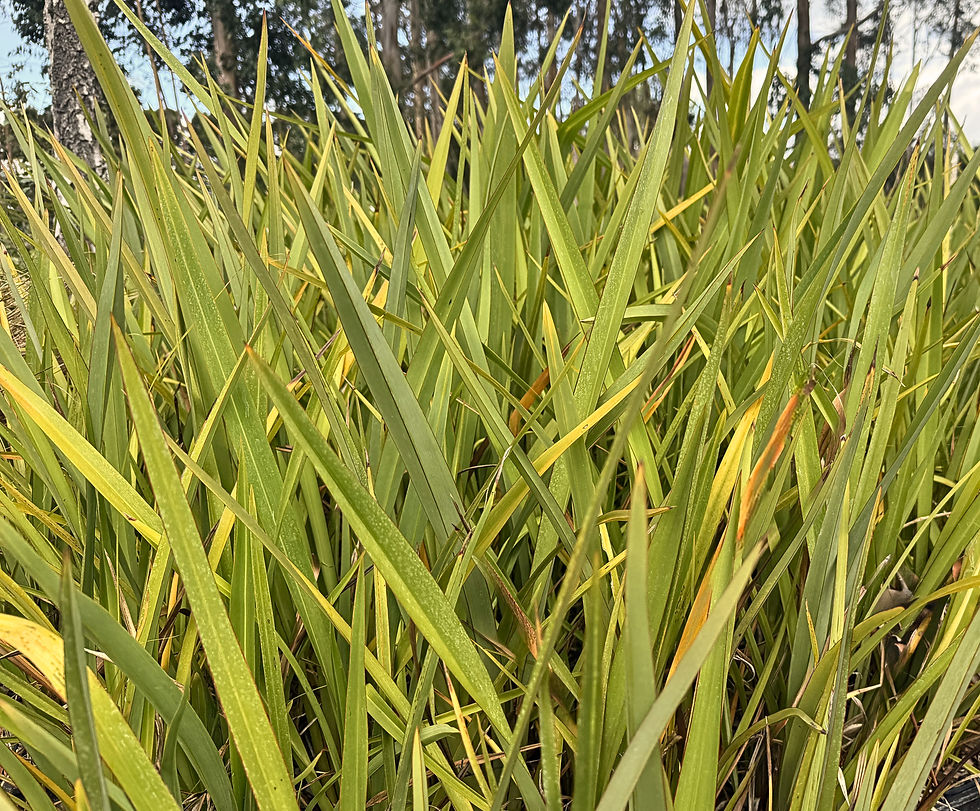
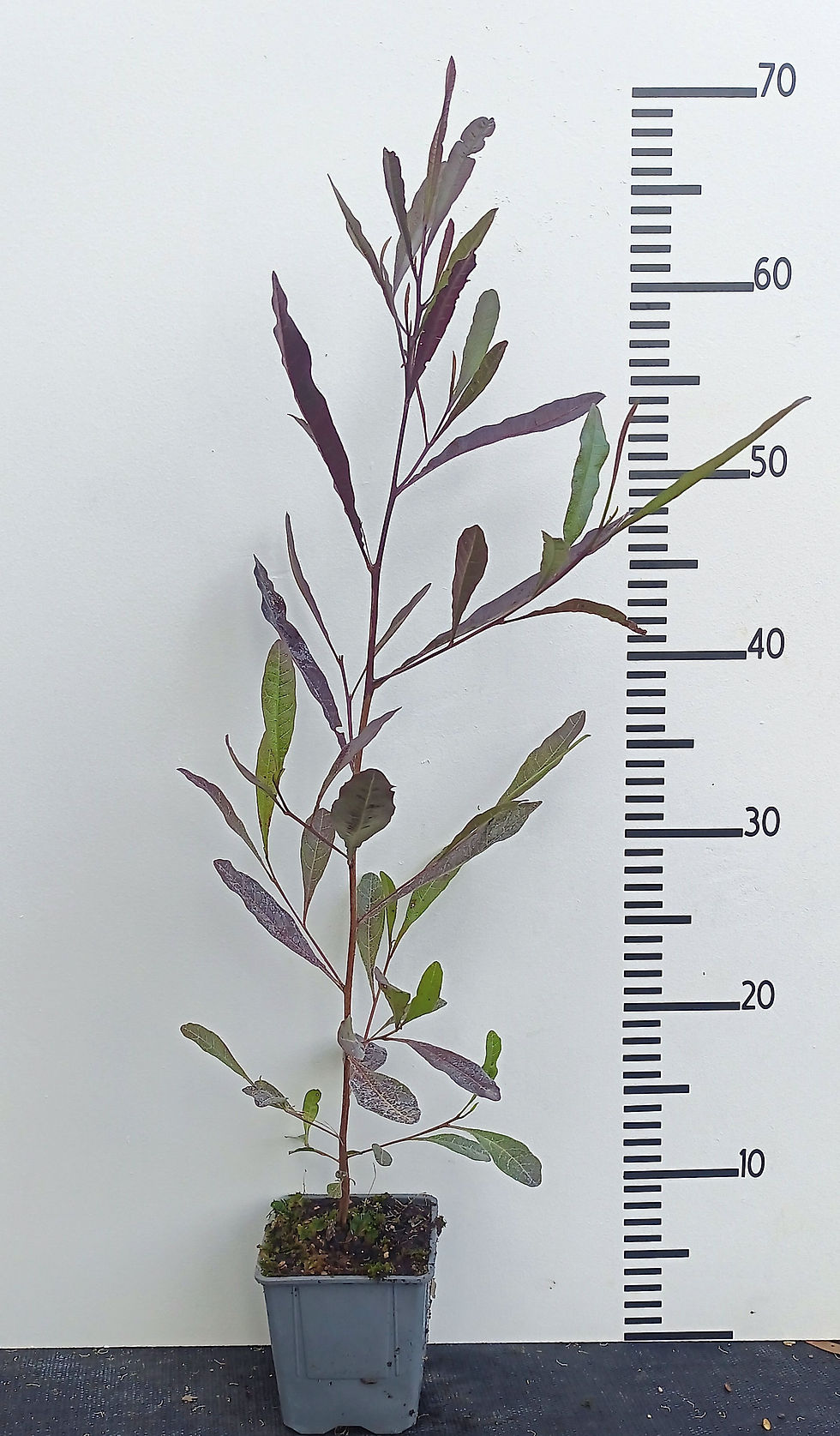
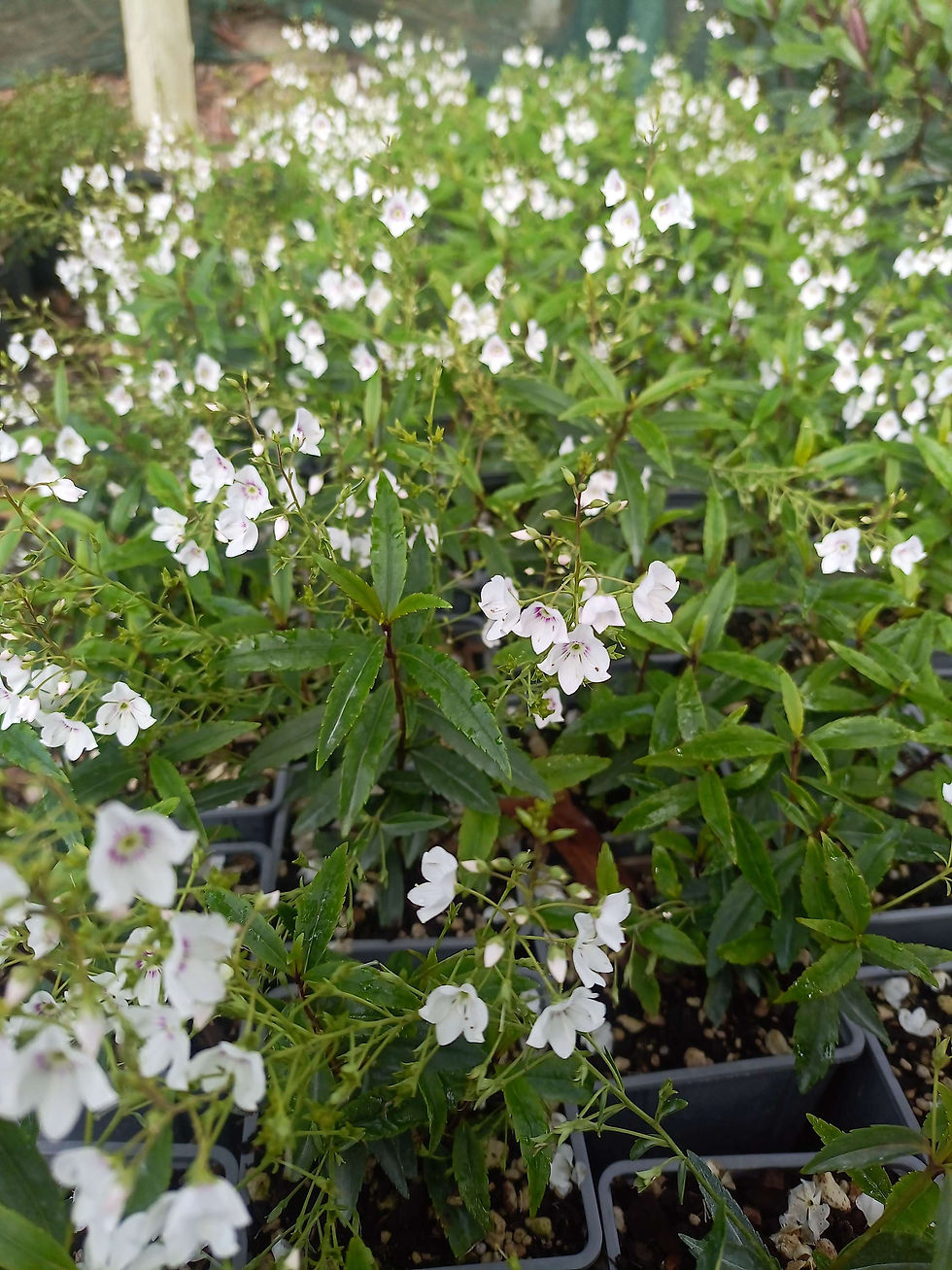
Carex secta Pūrei / Makura / Swamp Sedge is one of New Zealand's most architecturally extraordinary native sedges, and a plant that genuinely gets better with age. It forms dense tussocks of grass-like leaves, typically light green to yellow-green, and is renowned for developing elevated trunk-like bases up to 1.5 metres tall.
Over time, its arching foliage eventually rises on these basal trunks, which is particularly noticeable in wetland areas creating a striking, prehistoric-looking silhouette that is unlike almost anything else in the New Zealand native plant palette. It is incredibly fast-growing and most useful for enhancing wetlands and ponds, preferring wet conditions and full sun, but also tolerating dry shade.
Carex Sectra
Botanical Name Carex secta Māori Name Pūrei, Makura, Pūkio Common Name Swamp Sedge Family Cyperaceae Type Evergreen perennial sedge Origin Endemic to New Zealand — North, South, and Stewart Islands; also Chatham Island Mature Height Up to 1 m foliage; trunk base can add significant additional height in mature specimens Mature Spread Approximately 1 m Sun Requirements Full sun — does best in full sun Grows well in most soils and moisture regimes; thrives in wet, boggy conditions Water Tolerance Tolerates waterlogging year-round; prefers water depths of 10–30 cm Flowering Late September to December — loosely branching drooping panicles Fruiting October to March — seeds dispersed by wind, water, and birds Wind Tolerance Good Frost Tolerance Hardy — tolerates temperatures to approximately −12°C Drought Tolerance Can adapt to drier conditions once established, but truly excels in wet conditions Growth Rate Very fast growing Maintenance Very low Conservation Status Not Threatened Planting Tips: Ideal planting times are from autumn until late spring, allowing the plant to establish its root system before summer. Dig a hole twice the size of the root ball and mix in organic matter to enrich the soil. Space plants approximately 50–70 cm apart to allow them to spread and form a thick, lush mass.
Ideal Uses: Wetland plantings, revegetation plantings, and mass specimen landscape plantings. Ideal for rain gardens, pond margins, and riparian plantings, also works beautifully in mass plantings or as a focal point in rock gardens. An outstanding choice for erosion control, stormwater filtration, and stream bank stabilisation.
Ongoing Care: Pruning is primarily undertaken to remove dead or damaged foliage, which can be done at any time. If more aggressive pruning is required, this is best done in summer when the plants are actively growing, and plants can safely be reduced by up to 75% at this time — but always leave at least 10 cm of growth at the base. Avoid heavy pruning in winter. An annual application of balanced slow-release fertiliser in early spring will help promote vigorous growth if needed, though this is generally unnecessary in fertile soils.