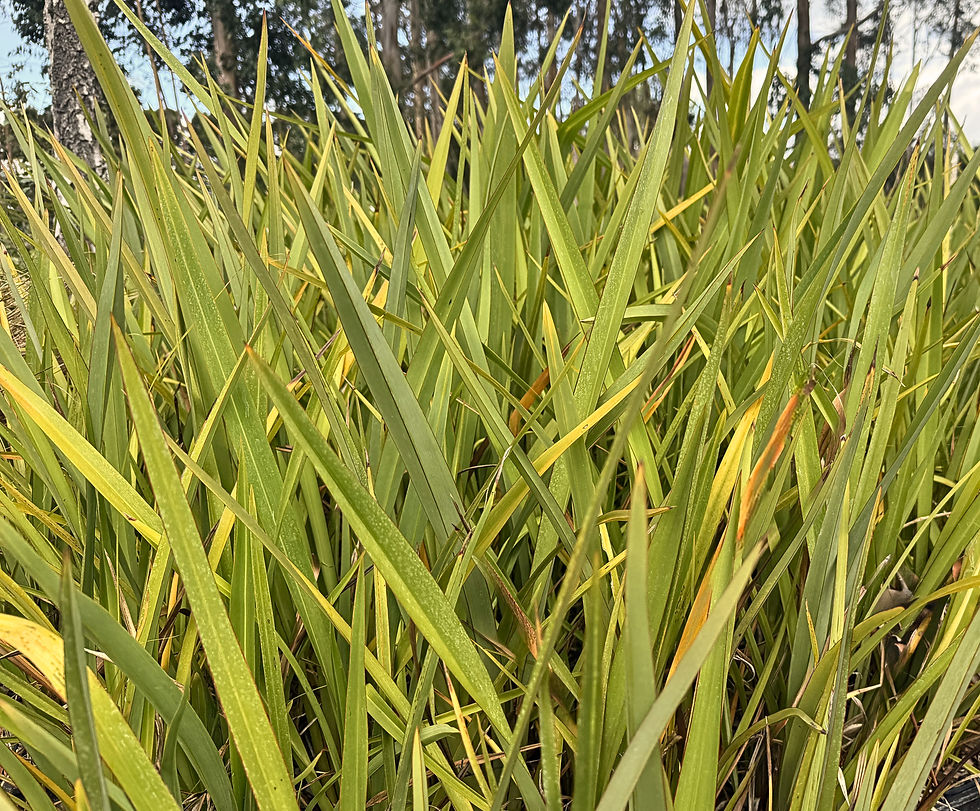
Carex virgata Swamp Sedge / Pūkio is one of New Zealand's most hardworking and ecologically valuable native sedges. A vigorous, tussock-forming plant with narrow, bright green, arching leaves, it thrives in damp to very wet conditions such as swamps, drain margins, but is also surprisingly dry-tolerant. Its dense clumping habit and upright, arching form bring a strong architectural element to landscapes, while its roots quietly get on with the serious business of holding banks, filtering runoff, and supporting local wildlife. In spring and summer it produces small brown flower spikes that add a subtle seasonal texture to the planting.
Whether you're planting the margins of a pond, stabilising a stream bank, managing stormwater, or simply adding movement and structure to a moist garden bed, Pūkio is up to the task. It's fast-establishing, low-maintenance, and a genuine asset to any restoration or native garden planting.
Carex Virgata
Botanical Name Carex virgata Māori Name Pūkio, Toitoi Common Name Swamp Sedge Family Cyperaceae Type Evergreen perennial sedge Origin Native to New Zealand and the Chatham Islands Mature Height Approximately 0.9 m Mature Spread Approximately 0.6–0.9 m Sun Requirements Full sun to partial shade Soil Prefers consistently moist to wet soils; tolerates waterlogging Flowering Spring–summer — small brown flower spikes Wind Tolerance Good; suits coastal conditions Frost Tolerance Hardy Maintenance Very low — remove old or dead leaves if desired Conservation Status Not Threatened