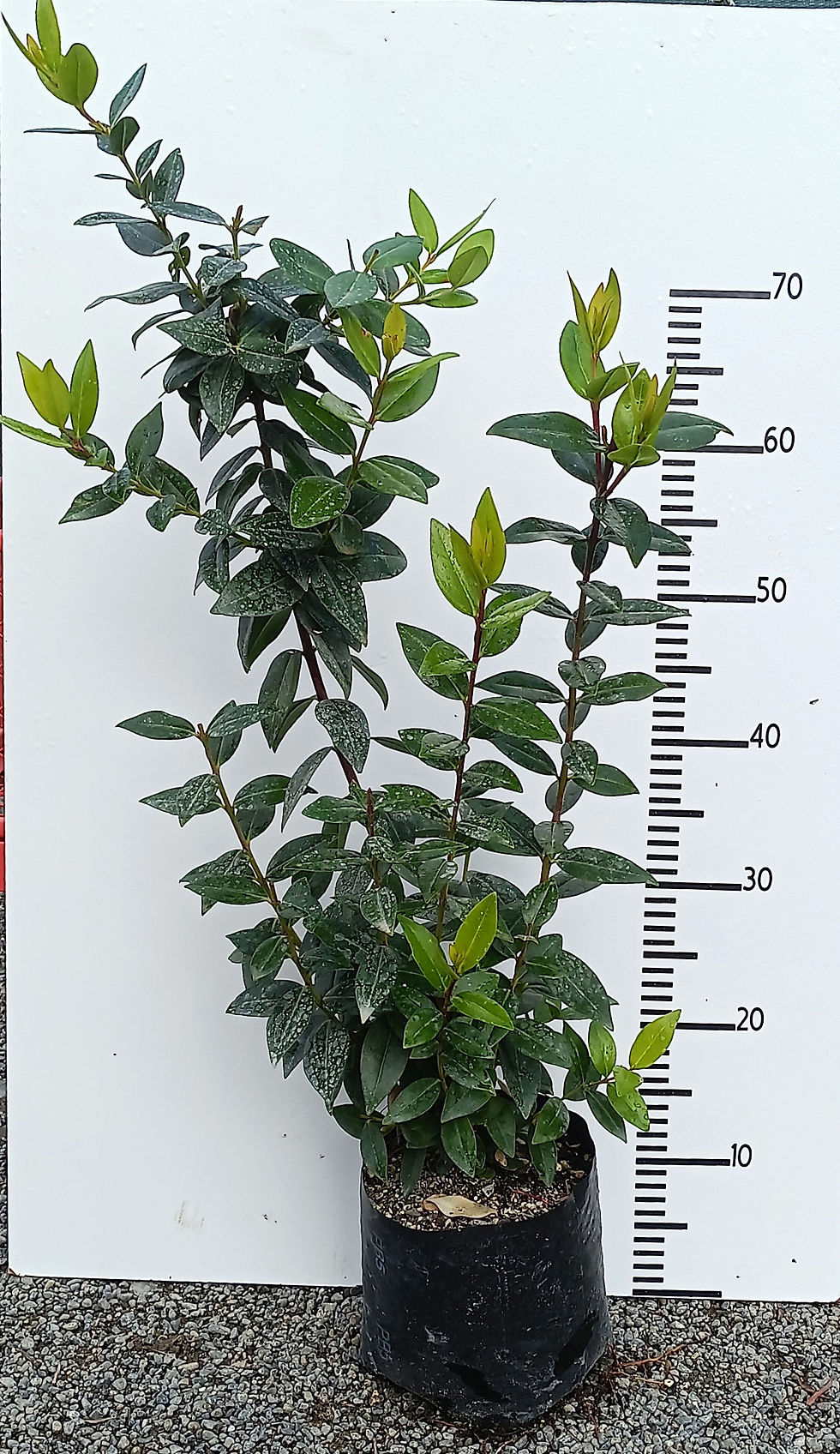
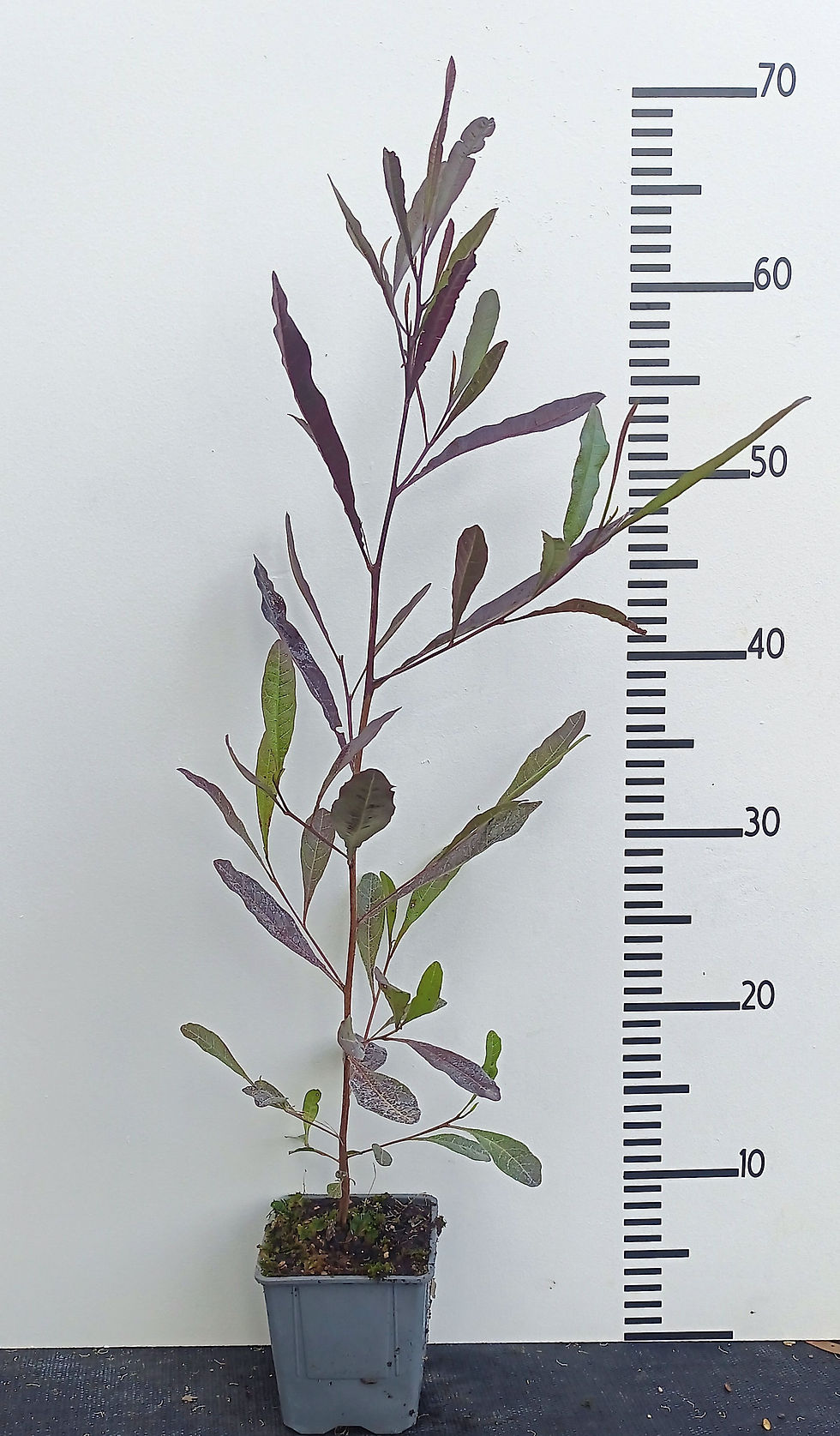
Griselinia littoralis Kāpuka / Broadleaf / New Zealand Broadleaf is one of New Zealand's most trusted, hardworking, and handsome native trees, and the backbone of countless hedges, shelter belts, and restoration plantings. Found throughout New Zealand in forests from sea level to 900 m, Kāpuka forms an attractively dense bushy tree with deep green oval leaves that are thick and very shiny. Hardy and tough, Kāpuka is one of the few green-leafed natives that does equally well on the coast and in alpine or inland situations. Its thick, leathery leaves withstand a fair amount of wind while still looking good, and the shrub itself grows large and round, very easy to keep compact and tidy with an occasional trim. Small cream flowers appear in spring, attracting native pollinators and providing a good source of pollen for bees, while in autumn the female trees produce small purple-black fruits that tūī love. Our Kāpuka is seed grown — an important distinction for ecological restoration and revegetation projects. Seed-grown plants carry greater genetic diversity than cutting-grown stock, producing trees that are more resilient, better adapted to local conditions, and of significantly greater ecological value to native wildlife and plant communities.
Please note - photo is of our pb3 range