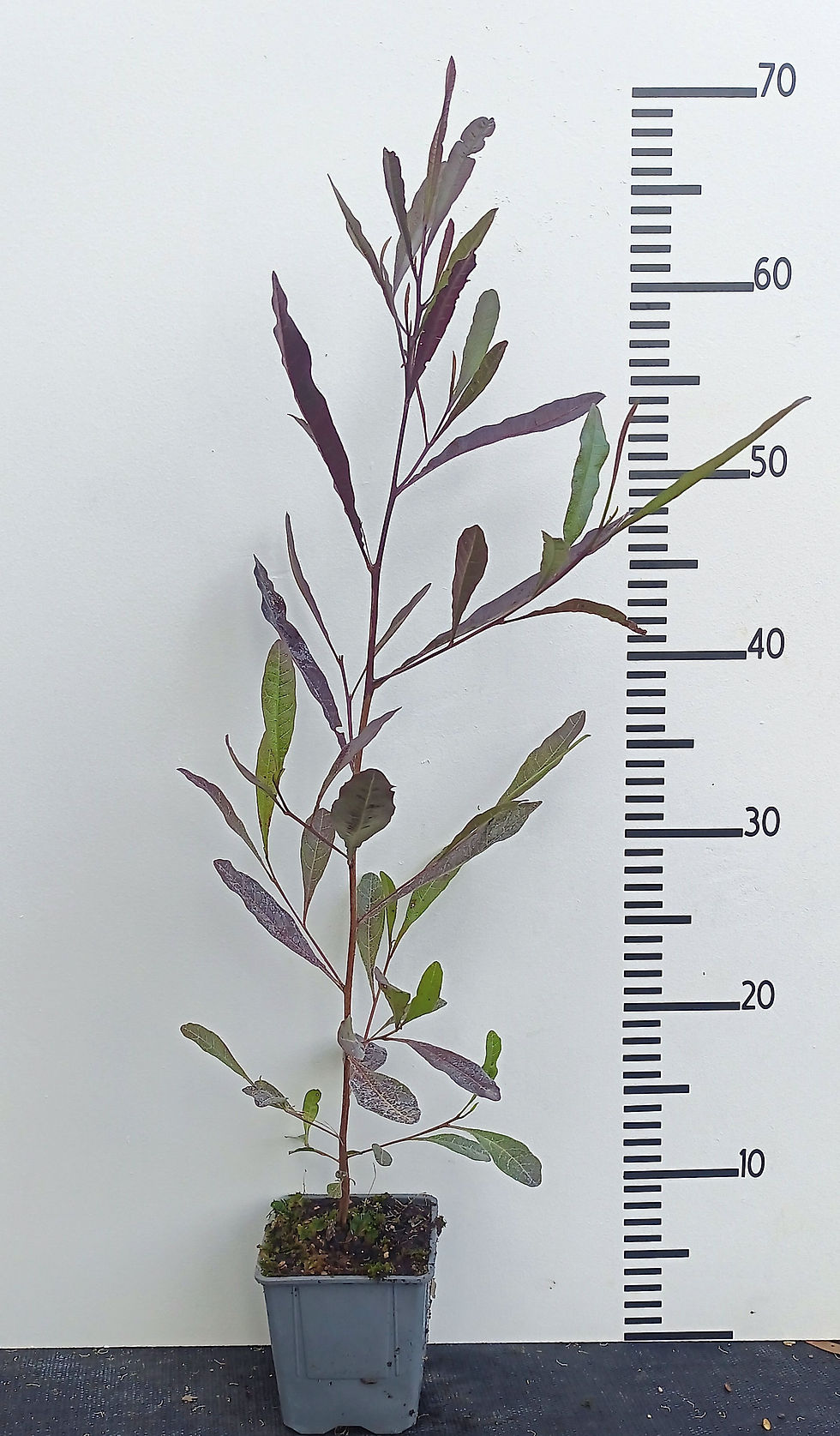
Pittosporum tenuifolium Kōhūhū / Black Matipo is one of New Zealand's most versatile, widely loved, and easily grown native trees, and a cornerstone of native gardens and revegetation plantings from Northland to Southland. A fast-growing evergreen, Kōhūhū features distinctive wavy-edged green leaves on striking dark stems, and produces small, sweetly scented purple flowers in spring.
Those flowers are something special, their colour deepens from dark red to near-black as they age, and they fill the evening air with a rich honey fragrance, attracting moths and night-flying insects that are among New Zealand's most important indigenous pollinators. Quick and easy to grow in sun or shade, Kōhūhū can be clipped into any size or form, making it excellent as a screen or hedge.
Pittosporum tenuifolium
Botanical Name Pittosporum tenuifolium Māori Name Kōhūhū, Tāwhiri, Rautāwhiri Common Name Black Matipo, Kohuhu Family Pittosporaceae Type Evergreen shrub / small tree Origin Endemic to New Zealand — widespread throughout both the North and South Islands Mature Height Typically 4–6 m in garden conditions; up to 10 m in ideal conditions Mature Spread Approximately 1 m — naturally upright and narrow form Sun Requirements Full sun to full shade — one of the easiest natives to grow in almost any light condition Soil Prefers light, well-drained soils; avoid consistently damp or waterlogged conditions Flowering Spring — dark purple to near-black, honey-scented flowers Wind Tolerance Excellent — tolerates wind and salt spray; suitable for coastal sites Frost Tolerance Hardy Drought Tolerance Good — tolerates drought and dry soils Growth Rate Relatively fast — can reach 3 m within five years Maintenance Very low — tolerates heavy clipping Conservation Status Not Threatened