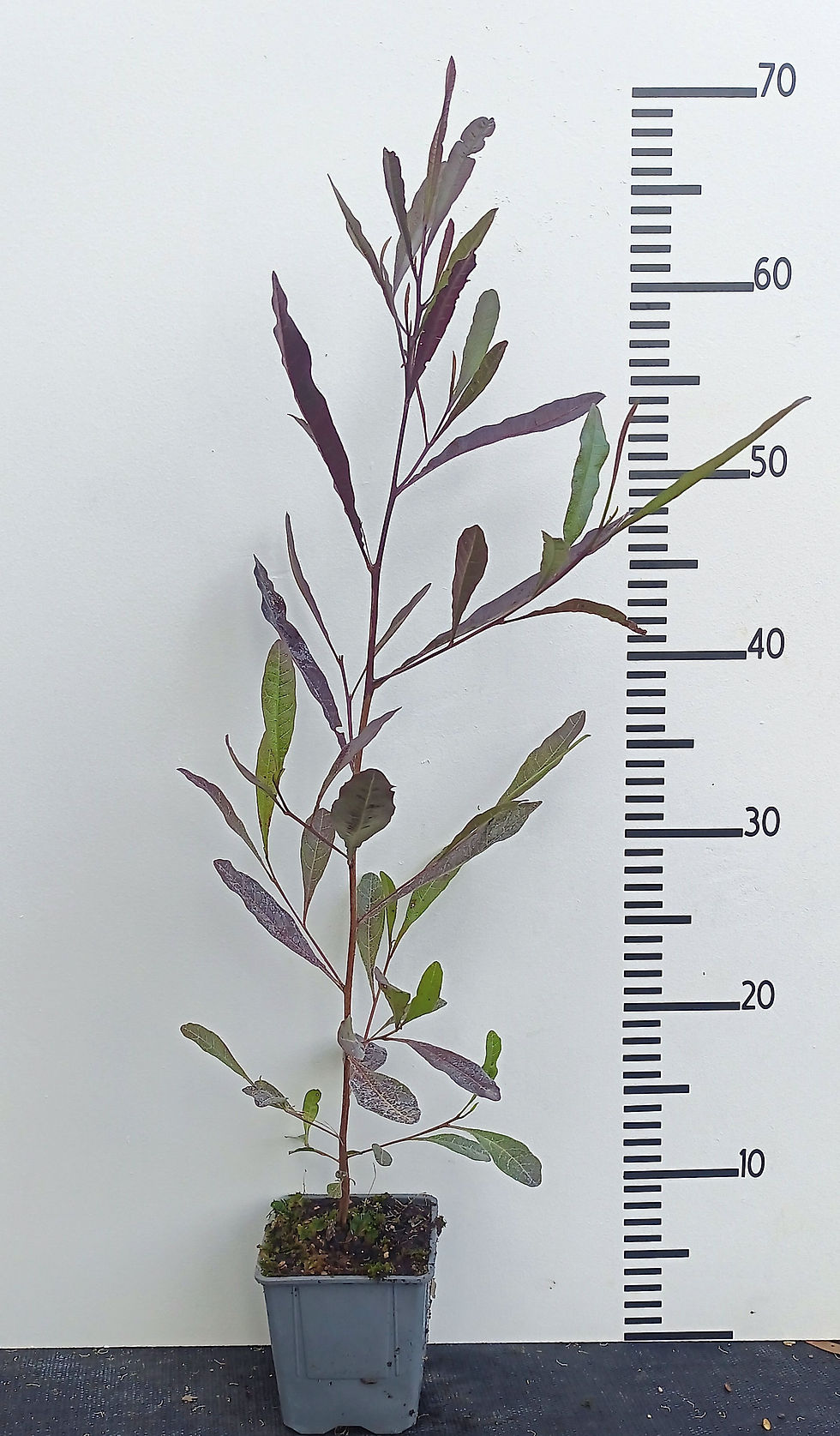
Prumnopitys taxifolia (Matai / Black Pine)
A stately New Zealand native tree with strikingly different juvenile and adult forms. In its early stages, it features tangled orange branches with distinctive silver-toned foliage, creating a unique and eye-catching appearance. As it matures, the tree develops dense, yellow-green foliage and a characteristic trunk marked with a subtle “hammered” pattern.Matai typically reaches around 10 m tall and 6 m wide within 10 years, eventually growing into a large canopy tree of 25–30 m over several decades. Its contrasting growth stages and elegant form make it a standout choice for large gardens, mixed native plantings, or revegetation projects.
Prefers well-drained soils and sheltered conditions when young.
Matai does not produce true flowers like many ornamental plants. Instead, as a member of the Podocarpaceae family (a group of conifers), it has very small, inconspicuous reproductive structures.
- Male structures: Tiny, slender, catkin-like cones that release pollen. These are usually yellowish to brown and not particularly noticeable.
- Female structures: Even less obvious, consisting of small ovules that develop on short stalks.
After pollination, the female structure develops into a distinctive fleshy, berry-like receptacle (often bright red to purple when ripe) with a hard seed attached. This fruit-like structure is much more noticeable than the “flowers” themselves and is highly attractive to native birds.